_edited.png)
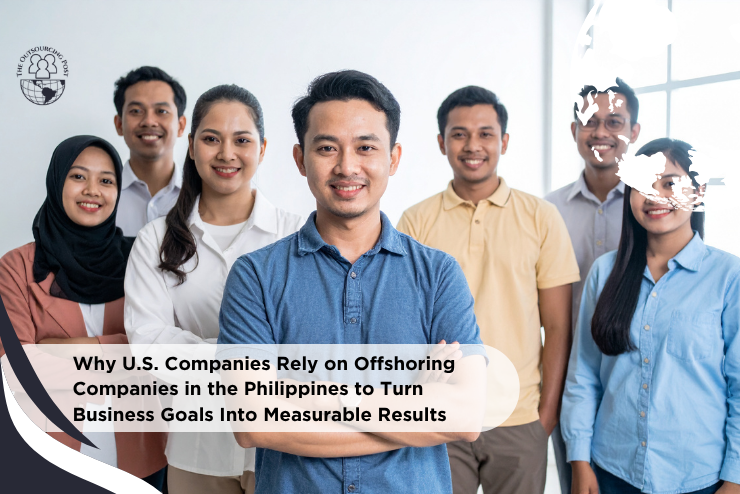
Why U.S. Companies Rely on Offshoring Companies in the Philippines to Turn Business Goals Into Measurable Results

Most U.S. companies don’t struggle because they lack direction. They struggle because turning plans into everyday work is harder than it looks.
Goals are usually clear at the start of the year. Teams know what they’re trying to achieve. But as work begins, things don’t always move in the same direction. Tasks get delayed, priorities shift, and progress becomes uneven.
This is where offshoring companies in the Philippines have become a practical option for many businesses. Instead of just hiring extra help, companies are building teams that can support day-to-day work in a more steady and organized way. It’s less about doing everything faster, and more about making sure things actually get done as planned. For many U.S. businesses, this has changed how they approach growth—not as a burst of activity, but as something that needs consistency to work.
Why Business Goals Often Don’t Turn Into Daily Progress

A lot of businesses start with strong plans. The direction is clear, and everyone understands what needs to happen. But once the work begins, reality sets in.
At that point, things slowly start to drift. Teams are busy, but not always aligned. Some tasks move quickly, while others quietly fall behind. Everyone is working, but not always in the same direction.
Over time, this creates a familiar gap. What was planned at the start of the quarter doesn’t always look the same in day-to-day execution. Not because people aren’t capable, but because the work isn’t always connected in a way that keeps everything moving together.
This is usually the point where businesses start looking for outside support—not just more people, but a more stable way of keeping work consistent.
Execution is not just about getting work done. It is about ensuring that every task contributes to a measurable outcome.
Why Many Companies Start Building Teams in the Philippines
When internal teams start feeling stretched, many U.S. companies begin exploring support in the Philippines.
It often starts simply—someone to take on repetitive work, or help keep daily tasks moving. But over time, this support usually becomes more structured. Instead of handling small tasks here and there, businesses start building more stable setups where people can focus on ongoing work.
This shift happens because companies realize something important: consistency is harder to maintain than effort.
With teams in the Philippines, companies often find:
Work continues even when internal teams are overloaded
Tasks don’t stop when priorities shift elsewhere
There is more balance in day-to-day execution
This is where offshoring companies begin to play a larger role—not just as support, but as part of how the business stays steady.
How Offshore Teams in the Philippines Support Day-to-Day Work

Once companies build a more stable setup, the focus naturally shifts from hiring to how work actually gets done.
This is where offshore leased staff in the Philippines arrangements often come into play. Instead of treating offshore workers as temporary help, businesses start integrating them into regular operations.
At this stage, the difference becomes clearer. Offshore teams are no longer “extra hands.” They are part of the daily rhythm of the business.
This usually looks like:
Clear responsibilities for ongoing tasks
Regular communication between onshore and offshore teams
Work that continues without needing constant direction
A more predictable flow of output
At the same time, companies often realize that who they hire matters just as much as how they work together. That’s where talent sourcing the Philippines becomes important. Instead of randomly filling roles, businesses start focusing on finding people who can actually support long-term needs, not just short-term tasks.
When both the people and the setup are aligned, work stops feeling fragmented. It starts feeling continuous.
Why Stability Improves When Costs Are Managed Better

As teams become more stable, companies also start noticing another change—how much easier it becomes to manage growth when costs are more predictable.
With cost-effective offshoring solutions in the Philippines, businesses are able to maintain support without constantly adjusting internal budgets or overloading in-house staff.
This doesn’t just reduce expenses. It changes how companies make decisions.
Instead of asking, “Can we afford to add help?”
They start asking, “What can we improve next?”
That shift allows businesses to:
Maintain steady operations during growth phases
Add support without disrupting existing teams
Focus more on improving output instead of controlling cost
Over time, stability becomes more valuable than speed.
Conclusion
What starts as a small step toward support often becomes something bigger.
For many U.S. companies, working with offshoring companies in the Philippines is not just about filling roles. It becomes a way to keep work steady, even as demands grow.
When teams are built carefully, supported properly, and aligned with real business needs, something changes. Work becomes less about reacting and more about progressing.
And that shift—from scattered effort to consistent execution—is what allows businesses to grow without losing control of how things actually get done.



Comments